Thursday, March 29, 2007
Hijab: Symbol of Oppression and Islamic Extremeism?

Tuesday, February 20, 2007
NewGround - A Program for Muslim-Jewish Dialogue
http://www.infocusnews.net
NEWGROUND: A Groundbreaking Muslim-Jewish Partnership
http://www.infocusnews.net/content/view/987/187/
By Abdussalam Mohamed
The Muslim Public Affairs Council (MPAC) and the Progressive Jewish Alliance (PJA) have recently launched NewGround, a bold new program that aims to jumpstart dialogue and community building between American Muslims and Jews. The program intends to put forth a new initiative for creating a dynamic and constructive way to promote Muslim-Jewish relations.
"The program has been on our minds for a long time," said Aziza Hasan, MPAC’s Interfaith Program Coordinator. "Each time tensions rise in the Middle East we feel that Muslims and Jews need to be talking to each other," she added.
Malka Fenyzesi, PJA’s Interfaith Program Coordinator echoed that sentiment by saying, "We want to be engaged in an honest and constructive dialogue that brings Muslims and Jews together."
According to Hasan, NewGround is the result of extensive research of previous Muslim-Jewish dialogue conducted in the Los Angeles area and around the country. Fenyzesi said that many in the Jewish community are looking to engage with the Muslim community in a substantial way.
In order to implement its challenging vision, NewGround has a four-pronged initiative. An intra-faith phase that will invite members of the same faith to address issues that pose both challenges and opportunities for understanding the "other;" an inter-faith phase, which would encourage Muslims and Jews to learn about each other and discuss common ethnic and religious issues such as anti-Semitism and Islamophobia; a civic engagement phase that would prompt members of the two faiths to address a joint social issue within the city of Los Angeles; and a fourth phase that would deal with each community’s Achilles Heel: The Palestinian/Israel issue.
Asked whether the Middle East conflict could be divisive enough to potentially derail NewGround’s efforts, Hasan was confident it would not. "We’ve conducted a research project on interfaith initiatives across the country and were able to learn from models already in place," she said. According to Hasan these existing models are based on academic research conducted by university professors and organization leaders.
"The goal of this dialogue is not to agree as much as it is to listen and try to understand each other," said Fenyzesi.
Other community organizations expressed support the idea. "Any dialogue that aims to widen the area of cooperation between the two communities is always welcome," said Hussam Ayloush, executive director of the Council on American-Islamic Relations (CAIR) Southern California office.
Ayloush said that in order for such dialogue to work, "There has to be an agreement between all groups that views on Israel are not going to be the litmus test for acceptance."
Hasan said that the reason previous dialogues between the Muslim and Jewish communities have failed was because there was no process for people to discuss emotionally explosive issues (such as the conflict between Israel and the Palestinians) as they happen in a controlled environment. "With a system of accountability, members of each faith would have to follow key ways to express their feelings," Hasan added.
Rather than being exclusive among organization leadership, NewGround will target attitudes within members of the Muslim and Jewish communities. It aims to train groups of dedicated persons who will take their newly learned skills to their respective communities with the expectation that they would impart what they have learned to other community members.
In spite of his optimism, Ayloush noted that such a dialogue was going to attract people who already believed in dialogue. "We need to find a way to engage those who are opposed to it," he said.
Hasan acknowledged that fact but added that, "At this stage, we’ve had significant interest from individuals who belong to groups who are part of the mainstream Jewish community." Fenyzesi agreed. "The focus of our project at this stage is our community members even though we are in contact with the leadership of both our communities," he said.
NewGround was launched last month of this year and has full time staff working in the Muslim and Jewish communities. It remains to see how well it will perform in the coming months and years especially if another Middle East conflict ignites.
Tensions in the region notwithstanding, both Hasan and Fenyzesi are confident that the new project would help their respective communities engage in a positive and constructive dialogue. "NewGround is a step in the right direction," said Fenyzesi. "We’re optimistic it will work," seconded Hasan.
Tuesday, February 13, 2007
Jewish Women Embracing Islam to Double

http://www.islamictimes.co.uk/content/view/227/
Written by Dr Piyara Begum
Wednesday, 23 August 2006
The reversions are carried out at Islamic Shariah Courts. Unlike the lengthy study requirements and proceedings necessary to convert to Judaism in Israel, reverting to Islam is a very short ordeal, entailing only declaring one's wishes to become a Muslim before the court.
But what are the causes of the Jewish Womens reversion? Some have said, mixed Arab and Jewish communities which exist in certain parts of Palestine and Israel has drawn sympathy amongst the Jewish women. Others say, the rights of Muslim women far exceed the rights of women in any other religion or community in the area or even the world and it is due to this that the Jewish women are increasing being drawn to Islam.
One former Jewish woman who reverted to Islam is Amalia Rahman. Friends and family say that she converted to Islam on the suggestion of her husband, Habib.
Amalia, however, begins her story much earlier, just after college when she moved to California to be with her family. She befriended a group of Arabs who used to visit her father's dried fruit and nut stand at the San Jose Farmer's Market. "I had a very low opinion of Arabs, you grow up Jewish so you have this low opinion. It's like a filmy residue from childhood."
Despite these ingrained feelings, she found herself drawn to them and their faith. "One thing I noticed about the people I had met, even though I had all these prejudices in my mind, that they were very good to each other. I wanted to be a part of that, a part of this feeling of belonging to something so wonderful."
Whatever the reason, all we can say is Allahu Akbar as Allah guides whom he wills and may he guide more into the folds of Islam.
Monday, February 05, 2007
Israel Approves Muslim Minister

The Israeli parliament has approved the appointment of the country's first Arab Muslim cabinet minister, Galeb Magadla, who joins the government as minister without portfolio.
His nomination was approved on Monday by 59 votes in favour to 23 against, and was then sworn in, a parliament spokesman said.
Saturday, February 03, 2007
Who Do We Blame?

Thunderstorms and tornadoes hit central Florida early Friday morning creating extensive devasation and 20 deaths (as of this writing).
Immediately, the "drive-by media" (Rush Limbaugh's term!) were all over the area and airways looking for somewhere or somene to blame.
"Who do we blame?" asked CNN's T. J. Holmes? The weather anchor replied that the "blame" belongs solely to an El Nino weather event.
But the media still asks, "Why aren't there warning sirens in these areas?" "Why isn't the 'reverse 911' protocol in effect yet?"
The plain truth is that these weather events are a regular occurrence in Florida. Newly-elected Governor Charlie Crist acknowledges this truth. He said that these extreme weather events are part of living in areas like beautiful Florida.
While we sympathize and pray for the people in Florida affected by this tragedy, we must also shift from the attitude of blame to one of personality responsibility. Simple measures can help.
This storm hit in the early hours of the morning. Many families were alseep and could not hear the warnings on the radio and television. But a home weather radio would have sounded an alarm to wake up the family. Every household needs to own a weather radio. One can be purchased from as little as $20 to on up for more sophisticated models. (Also check out National Weather Radio online).
People who live in mobile homes need to utilize the ties for securing the unit. Even though strong winds can knock down these trailers, it may help to minimize damage or save lives. Inspectors showed reporters many totally destroyed mobile homes that had not been tied down.
The purpose of this post is not to "blame the victim". The purpose is not to "blame" anyone. We must prepare ourselves in life the best we can for what we know will happen sooner or later. It is not a matter of "if" but "when".
Even if we prepare ourselves well, Allah (swt) will still tests us. He tells us in our beautiful Book:
"Be sure We shall test you with something of fear and hunger, some loss in goods or lives, or the fruits of your toil, but give glad tidings to those who patiently persevere, who say, when afflicted with calamity: 'To Allah we belong, and to Him is our return." They are those on whom descend blessings from Allah, and Mercy, and they are the ones that receive guidance." (2:155-157)
To the Muslims in Florida affected by this most recent test: Hang in there. We will all be saying dua for you. Be patient and know that Allah (swt) will help you and reward you.
Saturday, January 20, 2007
Courage to Care

Muslim Family Who Hid 26 Jews in Albania from the Nazis Honored by ADL
ADL Press Release: New York, NY, January 18, 2007
A Muslim family who saved 26 Jews from the Nazis and led them to safety in the mountains of Central Albania was honored by the Anti-Defamation League (ADL) with its Courage to Care Award.
The award was presented posthumously to Mefail and Njazi Biçaku on International Rescuer's Day, January 17, in New York City. Accepting the award on their behalf were family members Muhamet Biçaku, Elida Hazbiu and Qemal Biçaku, two of whom came from Albania.
Michael Salberg, ADL Director of International Affairs, who presented the award said; "Mefail, his son Njazi and their entire family had the courage to care. Through their compassion and valor without regard for religious or ethnic differences they upheld the honor of the human race and the conscience of the world. In the moral void that engulfed the world in those nightmare days when the cruelty of the Nazis ran rampant, the Biçaku family was among those few shining stars."
H.E. Adrian Neritani, Ambassador of the Republic of Albania to the United Nations spoke at the award ceremony as did Dr. Anna Kohen, President of Motrat Qiriazi, the Albanian American Women's Organization and Myriam Abramowicz, filmmaker and originator of the Hidden Child Movement.
On September 1943, as the Nazis began searching for Jews in the region, word reached Mefail Biçaku that a number of people were in great need. Mefail, a man well-known for his bravery and honesty, gave his "besa"- his word of honor- that he would protect, feed and shelter them. Njazi, his son, guarded their charges constantly, and when bandits in the area suggested Mefail turn the Jews in and claim their wealth, he refused.
In February 1944, when the Nazis descended upon the mountain hiding place, not a single Jew fell into their hands. During the Holocaust, Albania was the only country in Europe that protected and sheltered its entire Jewish population, both native and foreign. Through the valiant efforts of Muslims and Christians, all of Albania's Jews survived the Holocaust.
Mefail and Njazi Biçaku have both been recognized by the State of Israel and Yad Vashem by being selected to receive its highest honor, the Righteous Among the Nations Award.
In 1987, ADL initiated a unique award to honor rescuers of Jews during the Holocaust era. The ADL Courage to Care Award is a plaque with bas-reliefs depicting the backdrop of the rescuers' exceptional deeds – the Nazis' persecution, deportation and murder of millions of Jews. The Courage to Care program is sponsored by Eileen Ludwig Greenland. Past recipients of the ADL Courage to Care Award include: Hiram Bingham IV, Sir Nicholas Winton, Konstantin Koslovsky, Jan and Miep Gies, Aristides De Sousa Mendes, Jan Karski, Selahattin Ulkumen, Chiune Sugihara, the French town of Le Chambon-Sur-Lignon, Emilie and Oskar Schindler, The Partisans of Riccione, Italy and Johanna Vos.
The Anti-Defamation League, founded in 1913, is the world's leading organization fighting anti-Semitism through programs and services that counteract hatred, prejudice and bigotry.
Monday, December 25, 2006
Muslim Prayer Room Set Up At Ben-Gurion Airport

Photo by Gilad Kavalerchik
In an attempt to build bridges, Alhamdulillah:
http://www.ynetnews.com/articles/0,7340,L-3342862,00.html
Sunday, December 03, 2006
Reverts and Non-Muslim Holidays

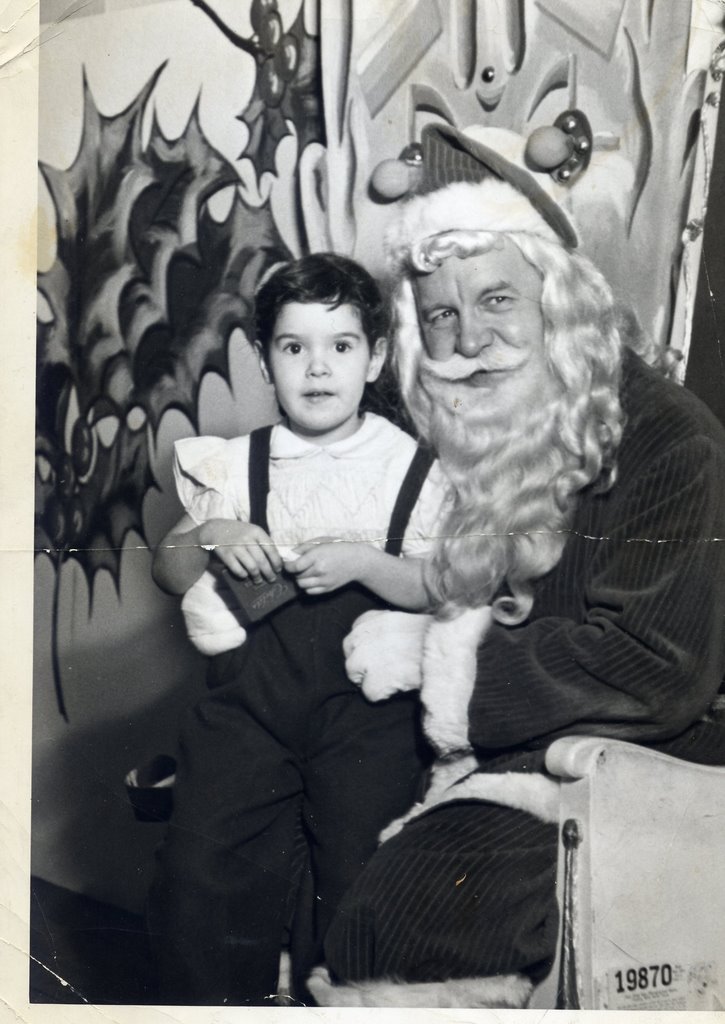
This is a picture of Santa Claus and me. On the back is scribbled, "3 1/2 years old". I recognize the handwriting as belonging to my mother. Since my family lived in New York City when I was that age, this picture was most likely taken in a Manhattan department store.
One of the best gifts left to me by my family is a rich photographic history of my childhood. The annual ritual of taking a photo with Santa is well documented.
Holidays were a big deal in my family. My mother was Roman Catholic and my father was Jewish. One of the things my parents did to try to make their inter-faith marriage work was to celebrate the holidays of both traditions. My mom hosted the Christian and secular holidays at our house, and the Jewish ones were hosted in the home of my father's mom, my grandmother.
On New Year's Eve my mother would cook sauer kraut and we would attend midnight mass. The Jewish New Year, Rosh Hashanah, found us sitting in the synagogue, listening to the blowing of the shofar.
Spring brought the exictment of Easter and Passover. The Easter Bunny would bring us baskets filled with chocolate and jelly beans. My mom cooked eggs and my brother and I eagerly waited for them to cool so we could dye and decorate them. Our neighborhood had an Easter Egg Hunt. Passover found us sitting around the Seder table, reading from the Haggadah, and learning the significance of the traditional arrangement of symbolic foods on the Seder plate. At the end of the Seder meal, an afikomen (special matzoh) was hidden and hunted by all the children present. The kid who found it won a prize.
During the Christmas season, we made the annual trek to the department store to sit on Santa's lap, to tell him what we wanted him to bring for us on Christmas morning. There were sweet smelling Christmas trees, decorated with silver tinsel and colored lights. We left milk and cookies on the dining room table for Santa on Christmas Eve. As well, we lit the Hanuukah menorah and were given a gift every day for eight days. We helped to decorate at the synagogue, and play the spinning draedel game at home.
All this came back to me yesterday when I went to the pharmacy. As I waited for a prescription to be filled, I wandered through the aisles filled with Christmas decorations, miniature Santas, gift wrapping paper, snow globes, wreathes, and candies. A feeling of sadness came over me. It happens every year. It's not as bad as it was in the beginning, when I first came to Islam, but it still happens.
I became a Muslim, Alhamdulillah, in 1998. As I studied and learned more about my new religion, my heart swelled with gratitude for being led to Islam. At the same time, I entered a grief process. I was keenly aware that my choice to come to Islam meant shedding my old life, and starting a new one. Territory that was completely uncharted. It was frightening and exciting at the same time.
It started with my family's negative reaction to my re-version. Becoming a Muslim also meant changing the way I dressed in public: no more sleeveless dresses, no more hairstyles, no more flashy jewelry, no more nail polish. I exchanged these things for hijab, and now nothing shows of me in public other than my face and hands. My diet changed. The decor of my house changed. Just a few of many, many changes. Don't get me wrong, I do all of this for Allah (swt), and it is my choice, but it has been a process.
But the single most difficult part of the grief process was giving up non-Muslim holidays. Not only the Christian and Jewish holidays, but also the secular ones: New Year's Eve, my birthday, Valentine's Day, Mother's Day, Thanksgiving ... and my favorite of them all, April Fool's Day! The only holidays celebrated by Muslims are the the two Eids.
Ramadan and the two Eids exacerbated my grief process more than anything else. Why? Because I miss my family. Family is a crucial aspect of Islam. I miss the big get togethers. Like many reverts to Islam, I don't have Muslim family.
But in Islam, I have learned that no special day is needed to express love for my husband. Every day in our marriage can be Valentine's Day. Likewise, every day is an opportunity for Thanksgiving, or more appropriately, giving thanks, expressing my gratitude to Allah (swt) for the countless blessings in my life.
Sunday, November 19, 2006
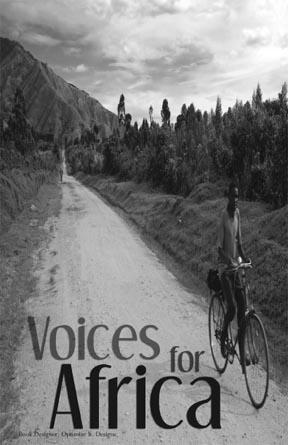
Voices For Africa

Voices for Africa is a project organized and made possible by Linda D. Delgado (Sister Widad), owner of Muslim Writers Publishing http://muslimwriterspublishing.com/books.html
Voices for Africa contains poetry contributions from Muslims and non-Muslims alike. It also contains awesome photography!
Voices for Africa gives voice to people who in many cases cannot speak out for themselves.
For a FREE download of the booklet, click on the link below the picture above. You are encouraged to put Voices of Africa on your website or blog. You can distribute it to anyone you want. The only thing asked is that Voices of Africa is distributed WITHOUT CHARGE to others. Why? Because Voices of Africa is a gift. It is a gift to Africa and to you. Enjoy! It is absolutely breathtaking!
Monday, November 06, 2006
Left to Tell

I just finished finished reading this wonderful book. When I saw it in my book club catalogue, it caught my eye because of the powerful effect that the film Hotel Rwanda had on me. After finishing Left To Tell, I watched Hotel Rwanda a second time. I thought that the film packed an emotional punch the first time I saw it, but I was not prepared for the feelings I experienced when I viewed it again. Left to Tell is Immaculee Ilibagiza's personal story of survival during the genocide of over 1 million Tutsi by the Hutu Interahamwe in 1994. Over 1 million people ... slaughtered in roughly 3 months.
It left me asking myself a simple question: "Why?" After the Holocaust of World War II, the world promised, "Never Again."
But it did happen again after the World War II Holocaust - and not only in Rwanda ...
In 1988, in Halabja, Iraq - on Bloody Friday when Saddam Hussein murdered innocent Kurds ...
And again in 1995, in Bosnia - when Slobodan Milosevic ordered an ethnic cleansing in Srebrenica ...
And again in 2004, in Qamisho - when the Syrian government ordered the massacre of Kurds ...
And present day, in the Sudan, in Darfur - the Janjaweed killers are murdering and raping under the protection and blessing of Omar Hasan Ahmad Al-Bashir.
Elie Wiesel, Nobel Prize winner and Holocaust survivor said, "We have a moral obligation to intervene where evil is in control."
When will the world keep its promise?
Sunday, October 22, 2006
Tuesday, October 03, 2006
A Poem To My Aunt
When my father died,
I never let you know
How many tears I cried
By my own blood family
I was cruelly betrayed,
Even my husband and friends
Were thoroughly dismayed
You claimed you were respecting
The wishes of his wife,
By not letting me know he
Was at the end of his life
You admitted you were wrong,
And said you were confused,
The right to attend his funeral
I was refused
Now your daughter, my cousin
Has gotten engaged,
My desire to come to the
Wedding has you enraged
The thought of your Muslim niece
Coming to the Jewish service
Dressed in garb, wearing hijab
Has gotten you nervous
How would you explain it
To all of your friends?
If it offended them,
How could you make amends?
Concerned with appearances
and how it might look,
You removed my picture
From the family scrapbook
My conversion to Islam
You cannot accept
Far from the family fold
I have been kept
L’chaim to my cousin
On her wedding day
To keep the family peace,
I will stay away
Friday, September 29, 2006
Musa's Ramadan Diary

Alhamdulillah, read the story of a 15 year old boy who re-verted to Islam, and who is struggling with his Ramadan challenge:
http://www.islamonline.net/servlet/Satellite?c=Article_C&cid=1158658383946&pagename=Zone-English-Discover_Islam%2FDIELayout
Saturday, September 23, 2006
Ramadan Mubarak and L'Shanah Tovah!

As Salaamu Alaikum!
Ramadan and Rosh Hashanah fall together at the same time this year. This is the first time it has happened this way since I reverted to Islam!
When I was Jewish, I used to love the month of September. Fall is my favorite season, and it came in with the excitement of the Jewish High Holidays. Rosh Hashanah, the Jewish New Year, occurs in the Hebrew month of Tishri, and heralds in the High Holidays. They end with Yom Kippur, which is the "day of atonement". Yom Kippur is observed on the 10th day of Tishri. It is a day for introspection, reflection, repentence, and forgiveness. Jews observe the fast on Yom Kippur.
The blessed month of Ramadan is the 9th month of the Islamic calendar. It is the month that our Holy Qu'ran was sent as a mercy to mankind. The entire month is observed with fasting, worship, and contemplation.
To all my Muslim and Jewish brothers and sisters: Ramadan Mubarak and L'Shanah Tovah!
Tuesday, September 19, 2006
Brother Abdul Malik Mujahid's (Sound Vision) Comment on Pope Comments
Pope Benedict XVI certainly parted ways with his predecessor in his recent remarks about Prophet Muhammad, peace and blessings be upon him. The quotation, delivered by a person of no greater stature than Catholicism's highest authority, stung Muslims worldwide and caused angry responses the world over. Response to bad words with strong words was enough. But sadly, a few churches in the West Bank were bombed and an Italian nun in Somalia killed in response as well. This is no way for Muslims to react out of love for our Prophet, peace and blessings be upon him. Those who did this cannot be friends of Muslims or peace and justice.The Prophet was, and continues to be, insulted in worse ways than this. But his response in his lifetime was to ignore the ignorance and instead, continue to relate to all through mercy, forgiveness and respect. As he knew, what matters is winning hearts, not avenging misinformation. The Prophet said: He who wrongs a Jew or a Christian will have me as his accuser on the Day of Judgment. We must all commit to better understanding, respect for all faiths and great care in how we speak about others' faith, especially in the context of today's volatile situation worldwide. On a brighter note, Ramadan is less than one week away! The month of mercy, forgiveness and freedom from Hellfire can't be spent in a blizzard of busyness and Iftar parties. If we really want to benefit through prayer, reflection and connection to Allah, then we have got to plan for it. This week at SoundVision.com, find out how, with our tips and planning guide.
Peace
Abdul Malik Mujahid
It is important to read Prof. Martin Martys opinion of the Popes comments. Prof. Marty is considered the most significant Protestant theologian of this time.
http://marty-center.uchicago.edu/sightings/archive_2006/0918.shtml
Also read what Karen Armstrong has to say about the Popes comments:
http://www.guardian.co.uk/comment/story/0,,1874653,00.html
*** A HISTORY OF MUSLIM-CHRISTIAN RELATIONS
http://soundvision.com/info/jesus/muslimchristianrelations.asp
Monday, September 11, 2006
United by 9/11, A Muslim and a Jew Strengthen Community Ties

by Alexandra Marks, Staff Writer of The Christian Science Monitor
Read story at: http://www.csmonitor.com/2006/0911/p12s01-ussc.html
Wednesday, August 23, 2006
Saturday, August 05, 2006
MY NEW NAME

I nearly gave up when a man picked up the phone. He said 'Salaamu alleikum' but spoke with a London accent. Was she married to a convert then? I was curious...
I said to Anwar, 'It's interesting about converts isn't it? What would make a Westerner become a Muslim?...I think they're brave.' (Leila Aboulela, "Minaret")
Like many new Muslims, I decided to choose a Muslim name. Although choosing a Muslim name is not a requirement for new Muslims, it is certainly an option. I began to read Islamic books so I could carefully choose a name. Since I was re-verting to Islam from Judaism, I was happy to read that our Prophet (saw) had two wives who came from Judaism: Juwariyyah and Safiyyah (ra). I decided to call myself Juwariyyah, but Alhamdulillah, I could not even pronounce my own new name! So I told all my new Muslim sisters that I was changing my name to Safiyyah. Although I can now pronounce the name Juwariyyah, I remain Safiyyah, Alhamdulillah!
SHAHADAH

My husband and I had gone to the masjid for a speaker’s program. It was the first time that he had invited me to the masjid since our marriage a year or so earlier. We had met and married while we were both working as substance abuser counselors in a rehabilitation center. We couldn’t have been more different in the beginning, as we are from entirely different backgrounds – he is black and I am white, he is Muslim and I was Jewish. Although he hadn’t asked me to become a Muslim prior to our marriage, he did give me silent dawah by his excellent example. He had an extensive Islamic library, and because I was an avid reader, I naturally read a lot of his books. I also observed his modest behavior, watched as he made salat five times a day, went to Jumah prayer on Fridays, and fasted during the month of Ramadan. So, it was natural that I would develop an interest in his religion.
When we arrived at the masjid, he pointed out the entrance to the women's section - downstairs in the basement. We agreed to meet in the parking lot after the program was over. OK, I can do this, I thought to myself as I entered the dark dank hallway and walked down the steep steps, I’ve never had trouble making friends before. I had always enjoyed “multi-cultural” situations and looked forward to the evening. My husband had suggested that I wear something “modest” for the occasion. I ran my hands down over my long-sleeved dress, straightening and smoothing it out. I felt confident that the women at the masjid would approve of my appearance. However, when I arrived at the bottom of the stairs and walked through the door marked “Sisters”, I could immediately feel it in the air: thick tension, suspicion, estrangement, confusion … every veiled head turned in my direction and the Muslim women stared at me as if I had two heads. I stood frozen in place in the entrance way, staring back at them. I had never seen so many Muslim women together in one place. Most of them wore the traditional hijab, but two women peered out at me through head coverings that revealed only their eyes. A few others sat with their scarves draped over their shoulders. When they saw me, they pulled them up over their heads. But then one of them got up from where she was sitting, approached me, and introduced herself as Sister Basimah. At least this one has a welcoming look on her face.
“Hi,” I said. “My name is Sharon. I’m here for the speaker’s program.”
“Is anyone with you?” she asked.
“My husband is upstairs,” I replied.
“Oh! Your husband is Muslim?” she asked.
“Yes. Yes, he is,” I said.
“Alhamdulillah,” she said. “Come over here and sit with us.”
She led me to a table where three other women were seated. They were the most beautiful exotic women I had ever seen. Right after she made introductions, I forgot each one of their names, which were equally exotic. Sister Basimah then got up and went to greet more people that had arrived.
“Where are you from?” one of the women asked me.
I replied that I was an American of Eastern European heritage, born in New York City.
“Where’s your husband from?” was the next question.
“He’s from America.”
“But, where is he from?
“Philadelphia,” I replied.
“No, I mean, what country is he from?”
“He’s American, born in the United States, he’s African-American, from Philadelphia,” I replied, thinking that there was a language barrier. I would later learn that most of the Caucasian women in the masjid were married to Arab men.
“Hmmm,” they all said in unison and they cast their lovely gazes downward.
“Are you thinking of becoming a Muslim?” another one asked, looking up at me with a beaming expression on her face.
“No,” I replied, “I’m Jewish.” Well, I wish you could have seen the look on their faces. As soon as it was politely possible, the topic was switched.
“Are your children Muslims?” one of them asked, returning to the interrogation.
“No.” I replied, “I don’t have any children.” That was it; their attempts to find a common ground with me had failed. They smiled at me and then something incredible happened for which I was not prepared: the conversation turned to Arabic.
I continued to sit with them at the table. They mostly spoke to each other in Arabic, and I mostly smiled. As more women would join the table, they would introduce me in English, “This is Sharon. She’s Jewish.” Then they resumed speaking in Arabic. When the program began, the women gathered in the prayer room and everyone sat down on the plush carpeted floor. But after about five minutes, the women started chatting to one another, all but drowning out the sound of the program which was being delivered over a stereo speaker from upstairs. After the program was over, the women went into the kitchen to prepare food. Sister Basimah came over and told me to sit and make myself comfortable until it was time to eat.
“But, let me help you,” I offered.
“No! You are our guest. Some American sisters have arrived. I’ll introduce you,” she replied.
Sister Basimah motioned to one of the women on the other side of the room. She came over and the two women kissed each other on the cheeks and greeted each other with a cheerful Arabic expression. Then they both turned to look at me.
“This is Sharon. She’s Jewish. Will you keep her company until we eat?” Sister Basimah said to the other woman.
“Oh, yes!” she replied. “Hi Sharon, I’m Sister Arwa!”
Sister Arwa and I sat down and began to get acquainted. I asked her questions such as how long had she been a Muslim, was she married to a Muslim, etc. Then she dropped the bomb.
“Why did you kill Jesus?” she asked me.
“What?” I replied. My face must have shown my shock and disbelief.
“I mean” she inquired again, this time softening her question, “why did the Jews kill Jesus?”
I couldn’t believe what I was hearing! I was astonished and rankled by the question. I could tell by the innocent look on her face that she really wanted to know. Maybe she never met a Jewish woman before, and this was her first real opportunity to get an answer to her burning question. When I was first introduced to her, I welcomed her company; after all, she was the first American I had seen that evening. Now, I wanted to get up and run from the table. Then the anger set in.
Giving her a baleful look, I replied through clenched teeth, “We did not kill Jesus. The Romans did!”
She returned the look of a wounded animal. Her lips opened to say something, but before she could reply someone called to her.
“Excuse me,” she said, “I’ll be back.” I could hear the relief in her voice.
A group of African-American sisters arrived at the masjid and I spent the remainder of the evening in their company. Before I left to meet my husband, Sister Basimah gave me her telephone number and encouraged me to call and arrange a time to visit with her.
I did call her, and we developed a beautiful relationship. She told me all about Islam and Allah. It was from her that I learned that no one killed Jesus! I learned that Allah raised him up unto Himself. She knew I was interested in Islam, and could sense that my heart was searching and yearning for spiritual peace. One evening while my husband and I were visiting her home, she came right out and invited me to Islam. The turning point occurred when she explained that all my sins would be forgiven when I came to Islam. She said that I would be reborn, like a newborn baby, with no sins, with another chance. I broke down and cried. I wanted another chance to get right with Allah. You see, I had a very checkered past. I always loved God, but I got lost in life. We asked her husband to help me say the Shahadah. When I told my husband what I was about to do, he was shocked and happy at the same time. He asked me if I was really sure about my decision, like he couldn’t believe what he was hearing. I responded that I was never surer about anything in my entire life. There was no internal battle, no fears or doubts. After I said the Shahadah, Sister Basimah’s husband said, “Mabrook! You’re now a Muslim!”
When we returned home, my husband gave me a gift of my very own Qu’ran and a summarized Sahih Al-Bukhari. Before I left Sister Basimah’s home that special evening, she gave me a gift of a booklet about modesty for Muslim women. She also gave me a prayer rug, a prayer dress, and a hijab. I have worn hijab since that day, Alhamdulillah. I have never taken it off, even after the dreadful days following September 11th.
When I became a Muslim in July of 1998, my father denounced me once and for all. He had been very upset with me anyhow for marrying a Muslim, and refused to recognize my husband as his son-in-law.
“But Sharon, those people hate us!” he cried.
All efforts to explain the difference between the peaceful religion of Islam and the political struggle between the Palestinians and Israelis fell on deaf ears. Never mind that my father was the first one in his family to marry outside of Judaism. My mother had been a practicing Catholic when they married. To add “insult to injury” in my father’s eyes, my husband was also African-American. Prior to September 11th, most Americans thought of Malcolm X whenever Islam was mentioned. Many other family members also made it known how disappointed and frustrated they were with my decision to marry a “Black Muslim”. My father died in August of 2001, one month before the events of September 11th. At the request of my father’s wife, my family did not tell me that he had died until after his funeral was over. Did they fear that I would show up in the synagogue dressed in garb accompanied by my black husband!
We are taught that the religion of Islam is for all people and for all time. It shouldn’t matter whether a Muslim is Egyptian, Pakistani, American, Saudi, Indonesian, or Palestinian. It shouldn’t matter whether he is black, white, red, or yellow. It shouldn’t matter whether he speaks Arabic, English, Spanish, or Urdu. Our cultural diversity should not divide our ummah. Allah tells us in the Qu’ran that, “We created you in nations and tribes so that you may know one another” (49:13).