Monday, January 26, 2009

Gaza Screams!


Sis Noona: Below is the original photo. I love what the software did with the kafeeyahs!


If anyone wants to join in on this fun, you don't need fancy software. You don't even have to download anything to your computer. Everything can be done at the site. Go to http://www.dumpr.net/.

The first screen is "select an effect to begin"

Choose "amazing circles"

Then the screens will move you through the process. It is VERY easy. I put the photograph into "amazing cirles" and got Gaza Screams! on the first try! You can try a variety of photographs that you have on your computer. Apparently, it does great things with faces. Also, having good colors and strong contrast in your original photo is also helpful.

You can save the result to your computer.

That's all there is to it.

Try it and post yours to your blogs, create a link back here or otherwise let us know, so we can all celebrate the creative fun!

Of course, if you want to work your result with some other PhotoElement software, you can do that, too!

Another cool "effect" is the ability to make a jigsaw puzzle from your photo. I'm going to try this, Insha Allah. I take photos of my students at Sunday School at the masjid (they are ages 4-7). This age range loves puzzles. Imagine their surprise, Insha Allah, when I bring them puzzles made from their very own photos!

Again, shutter-tip to Sister Marahm for turning me on to this software.

Saturday, January 24, 2009

Tuesday, January 20, 2009

44th President of the United States of America!

(Obama and His Grandmother in Kenya)


"There is a way to be good again." (The Kite Runner by Khaled Hosseini)

Monday, January 19, 2009

Digital Art

Impressed by the awesome images over at my dear Sister Marahm's blog, I emailed her and asked her to give me some help so that I could start making my own awesome images from my photographs.

My first attempt. Drum roll ....................................................

This image is created from a photograph of a monarch butterfly who was visiting my garden (flowers at the bottom).

Sis Marahm: is there a way to get the butterfly (upper half, to the right with orchard color on his wing) to stand out more?

Jazaka Allahu Khayr sis! I am really excited to improve with this art form! I was like a kid on Christmas morning (ermm ... Eid morning) going through the 400+ filters!

I will be emailing you often, Insha Allah :)

Sunday, January 18, 2009

Lilith Magazine


Even though I am now a Muslim, I still receive one of my favorite women’s magazines from my “former life” before my reversion to Islam from Judaism, called Lilith.

Lilith, “independent, Jewish & frankly feminist,” reminds me of Azizah Magazine for Muslim women. Both magazines overflow with religious and secular nourishment for the Jewish and Muslim female soul.

I eagerly devour each issue of Lilith from cover to cover, savoring the articles, essays, poetry, fiction, and book reviews that touch an aspect of my ethnic Jewish character that will never change even though I am now a Muslim.

One of the book reviews in the winter 2008-09 (vol. 33, no. 4) issue jumped right off the page at me. In a section that unfolded “what young adult fiction talks about now,” a review of Does My Head Look Big in This? by Randa Abdel-Fattah was predominately featured among those of seven Jewish authors.


A review of a book written by a Muslim woman about the religious coming out of a Muslim-Palestinian teenager being included in a magazine for Jewish women?

In this political climate?

What?!

After I recovered from my initial astonishment, I thought to myself, Why not?

I spiraled into a daydream where I visualized a Jewish teenager, her interest piqued by the review, going to Amazon.com and ordering Randa Abdel-Fattah’s book. Like the Muslim teenager, Amal, in Does My Head Look Big in This?, perhaps the Jewish teenager also prayed for peace. Maybe she, like Amal, dreamed of the time when both Palestinians and Israelis would one day enjoy the same rights, freedom, and dignity.

There is so much hate coming from both sides at the current time. Jewish women may not understand how much they have in common with Muslim women. I think that all women want pretty much the same thing. Peace and security. A safe environment for their children. Thriving communities. Good neighbors.

Reading stories and magazines about each other, learning more about each other as women, sisters, mothers, daughters, aunts, grandmothers, wives - well, it may be a start, Insha Allah.

Lilith has once again succeeded in living up to its “independent, Jewish & frankly feminist” distinctiveness.

Mazal tov Lilith!

Tell Obama What You Think About Israeli-Gaza Issues

The President-Elect has a website called Change.Gov.

There is page with all kinds of issues related to Israel, Gaza, and most importantly, aid to Israel.

Go here to see the issues and be sure to vote and make your voice heard.

Saturday, January 17, 2009

Jewish Editor Fired For Publishing Article


The below article, by Judith Stone, was sent to Debbie Ducro, a Jewish editor at The Kansas City Jewish Chronicle. She published it and was fired the next day:


Quest for Justice by Judith Stone

I am a Jew. I was a participant in the Rally for the Right of Return
to Palestine. It was the right thing to do. I've heard about the European holocaust against the Jews since I was a small child. I've visited the memorials in Washington, DC and Jerusalem dedicated to Jewish lives lost and I've cried at the recognition to what level of atrocity mankind is capable of sinking.

Where are the Jews of conscience? No righteous malice can be held against the survivors of Hitler's holocaust. These fragments of
humanity were in no position to make choices beyond that of personal survival. We must not forget that being a survivor or a co-religionist of the victims of the European Holocaust does not grant dispensation from abiding by the rules of humanity. "Never again" as a motto, rings hollow when it means "never again to
us alone."


Read the rest of Ms. Stone's article here.

Ironically, the newspaper, The Kansas City Jewish Chronicle, polled its readers about the situation in Gaza. Notice the questions and the interesting results:

Poll Question: What do you think of Israel's actions in Gaza?

Israel was wrong to respond this way. It will increase anti-Semitism. 37.9%

Israel was too restrained before and needs to hit Hamas hard now to restore its deterrent power. 28.8%

Israel had to do something, but the suffering in Gaza saddens me. 22.7%

Israel should have tried diplomatic talks with Hamas first. 9.1%

Israel's response was good, but it should listen to international calls for a cease-fire. 1.5%

Number of Voters
: 66
First Vote
: Thursday, 08 January 2009 17:12
Last Vote
: Saturday, 17 January 2009 01:16

Perhaps an email to The Kansas City Jewish Chronicle is in order to appeal to them to restore the editor, Debbie Ducro's job? If you write, remember to be respectful, and encourage them to be receptive to balanced journalism.

Friday, January 16, 2009

Friday Evening Reflections

Yesterday morning, I turned on the TV and saw a scene similar to this:


The Israelis had hit the UN main relief agency facility in Gaza. It appears that the Israelis had a Steve Urkel moment. Remember him? He's the guy that was always having little clutzy accidental moments. Afterwards, he would look around and say, "Did I do that?" And everyone would laugh. But what the Israelis did isn't funny. And probably wasn't an "accident".


Neither is this.

CNN also said that they finally managed to get a crew into Gaza yesterday. They entered Gaza through Egypt. Why couldn't they have entered through Egypt before yesterday? Were the Egyptians helping the Israelis in keeping journalists out of Gaza just like they helped them by closing their border to the Palestinian people? Since when do the Israelis control the Egyptian border?

Today, CNN claims they were able to see what three weeks of air strikes and ground assaults has done to the innocent civilians in Gaza.

Well, CNN. Now you are in. Where is your extensive coverage?

What CNN (and other American networks) has been covering non-stop is the US Airways Flight 1549 accident over the Hudson River in New York City.


The plan had left La Guardia and was destined for Charlotte, North Carolina.

However, they are speculating that some birds, possibly Canadian geese, were sucked into the plane's engines causing the pilot to have to "ditch" the plane into the Hudson River.

Imagine: you wake up in the morning planning to take a flight somewhere, possibly home, maybe to a business appointment, or to play some golf as one passenger said, and then suddenly you find yourself an actor in a strange play. Instead of enjoying a nice flight and arriving at your destination, you find your plane crashing to the ground and end up having to be rescued from the freezing water. You then go to the hospital and maybe find yourself giving interviews to the media. If you're like one of the passengers, you may even find yourself being a guest on the Larry King show that evening. Talk about a change in plans.

Allah (swt) is the Best of Planners, Alhamdulillah. We never know what He has planned for us on any given day.

Reminds me of a video of a khutbah given by Imam Siraj Wahaj that I saw one time. He was talking about one of the victims of the DC Snipers.

The victim was killed as he was coming out of a convenience store. Imagine, Imam Siraj said, one minute you're walking out of the store and scratching off your lottery ticket and the next thing you know you are in the grave being questioned by the Angels.

Alhamdulillah!

One never knows!

Having a powerful airplane being brought down by birds also reminded me of the power of the Almighty Allah (swt). And I remembered what He told us about birds in the Qur'an:

"Do they not see the birds held (flying) in the midst of the sky? None holds them but Allah (none gave them the ability to fly but Allah). Verily, in this are clear Ayat (proofs and signs) for a people who believe (in the Oneness of Allah)." An-Nahl, 79

and

"Do they not see the birds above them, spreading out their wings and folding them in? None upholds them except the Most Gracious (Allah). Verily, He is All-Seer of everything." Al-Mulk, 19

I wonder if there were any Muslims on that plane?!

Alhamdulillah! We should never take life for granted.

Insha Allah you all have a nice weekend.

Saturday, January 10, 2009

Gaza: CNN "Missing In Action"


A sister friend of mine in Saudi emailed me and mentioned the horrific media images that they were seeing over there.

Why are we not seeing them here? What do we see here in America?

We see CNN's Anderson Cooper and others standing on a hillside over Gaza ... telling us that they cannot show us what is going on within the Gaza Strip. They say that the Israelis will not permit international media to go inside the Gaza Strip. The reason, they say, is because the international media shows bias.

Do you believe it?

Jamal Dajani has written this article at the Huffington Post. According to Dajani's article, there are numerous Arab media organizations reporting from inside the Gaza Strip. He writes:

"There are more than a dozen television stations that still operate out of Gaza. For the past several years, Arab satellite networks have dispatched news reports out of Gaza almost on a daily basis. Leading Arab satellite networks all have offices and reporters in Gaza, such as, Al Jazeera (Arabic and English), Al Arabiya TV, Dubai TV, Nile TV, Abu Dhabi TV, to name a few. Then there is Hamas' Al Aqsa TV and independently owned Ramattan News Service. They have been beaming images of starving children living in desperate conditions during the Israeli siege on Gaza to millions in the Arab world and beyond. Despite these abundant news sources, CNN and other U.S. networks have elected to cover Paris Hilton and Anna Nicole Smith for days on end. Let's face the facts. Images of starving children do not sell advertisements. Trash does. Now, many of those children are dead!"

Why doesn't CNN and the non-Arab "international" media partner with any of these Arab organizations mentioned in Dajani's article? If they really wanted to bring us the truth, wouldn't they attempt to coordinate coverage with the Arab media?

What do you think?

Does it reinforce the so-called "conspiracy" theory that the Zionists control the media in America?

Thursday, January 08, 2009


Your Word is "Peace"


You see life as precious, and you wish everyone was safe, happy, and taken care of.

Social justice, human rights, and peace for all nations are all important to you.


While you can't stop war, you try to be as calm and compassionate as possible in your everyday life.

You promote harmony and cooperation. You're always willing to meet someone a little more than halfway.

Important ... Pass It Around (A Warning)


I received the following message in my email box. It is from one of our local Muslim email groups. The subject line read, "Important ... Pass It Around."

"Starbucks and McDonald's made a statement that all profits made from now until Saturday will be sent to the Israeli army to fight the Palestinian people. Enough of the blood shed. The women and children have been under siege for years, they have no water, food, medicine or electricity. They are prisoners in their own land. Please boycott Starbucks and McDonald's and pass this on to everyone you know. The link below just gives you a brief history of the Israelis and their so-called land. http://uk.youtube. com/watch? v=XUFLpP9Prxo "

Now, before you get all excited and start boycotting Starbucks and McDonalds, you must answer a simple question: Where is the proof that these companies made these statements?

Don't get me wrong. Perhaps these companies did make these statements in certain cities. But Alhamdulillah, where? What city?

A general check of the websites of these companies makes no such claims.

In this climate of high anxiety and emotion, it is easy to get swept up. Many Muslims and good citizens of the world feel powerless about the current situation in Gaza. They want to do something. And they should.

But I warn that we need to be careful!

To pass this email message around, forwarding it ad nauseum (like my group did) where it has the potential to reach hundreds, perhaps thousands of people, without proof has the potential to cause great damage to companies that may be innocent.

It is especially important for us Muslims to stop and think.

Let's say that we pass this information along anyhow, not caring whether or not there is proof or if it may be untrue.

We may be in danger of engaging in what is known in Islam as nameemah (slander).

In general, nameemah, usually refers to the act of carrying tales from one person to another. This disclosure can be by speaking, writing, nodding, intimating (hinting) or signalling. Nameemah is carrying discussions from one to another for the intention of mischief, disclosing secrets and exposing secret matters. If the party is innocent, it is a sin heavier than the weight of the skies. It was also said, "The acts of Nammaam are more harmful than the acts of Shaitan. Shaitan acts by imagination and whispering, while the Nammaam acts face-to-face and openly." Nameemah is an abomination. It is very widely spread amongst people and very few are safe from it. Nameemah is prohibited by Ijmaa (consensus of the Muslim scholars) and there are many clear references from the Qur'an and Sunnah against it. (from Slander by Abdul Malik Al-Qasim)

So, again I warn you all (and myself) to be careful. If these allegations are correct and can be proven, then these companies do deserve to be boycotted. But if they are not ...

There are other cures for our feelings of powerlessness and emotional pain.

Write a letter, make a blog post, sign a petition, participate in a peaceful demonstration, talk to others, write a poem, paint a picture, scream, pray ...

Muslim Matters has a 60 Minute Action Plan here.

Surf around the Muslim blogs. Many, like Organic Muslimah also have good ideas and provide excellent resources.

You get the idea: Make Yourself Heard!!! But in a halal (permissible) way!!!

(Oh! And the George Galloway video in the YouTube link is excellent!)

UPDATE: From Saudi and Scholars concerning this topic:

Boycotting American Products
Slih al-Fawzn

Boycotting Products Manufactured by Non-Muslims
Muhammad Ibn Slih al-'Uthaymn

Boycotting Products Manufactured by Non-Muslims
Saudi Arabia’s Permanent Council of Senior Scholars

Taken From: http://www.authentictranslations.com/tb-SocialDealings.aspx

ANOTHER UPDATE: (LINK INCLUDES A LETTER FROM STARBUCKS)

Re-posted with permission stated below from Brother Abu Khaliyl quranwasunnah@ yahoogroups. com:

As-salamu `alaykum wa rahmatullah:

Long ago we started getting a message that the Starbucks company was sending this or that amount of money from its purchases to the IDF. After reading the message fabricated and attributed to the chairman Howard Schultz, I recognized the falsehood of it, as I am a native English speaker (phrases of it were not American English, but it has British expressions that give it away, as well as mistakes, for both British and American English, making it clear that it was not stated by someone who is a native of NY city) and I looked into the matter, so this is what Starbucks had to say about it:

"You may have heard a rumor about Howard Schultz, Starbucks and the Israeli army. The rumor is false. Neither chairman Howard Schultz nor Starbucks fund or support the Israeli Army. Starbucks is a non-political organization and does not support individual political causes."

Contact Information: Starbucks Coffee Company (206) 318-7100 mailto:press@starbucks.%20com

http://www.starbuck%20s.com/aboutus/%20pressdesc.%20asp?id=668&

With current events, this false claim - that Starbucks supports the IDF - is gaining steam again, so please forward this to anyone that sends you such a message. Also, just to throw dirt in the face of those who spread such lies among the Muslims, see this:http://www.snopes.com/politics/israel/starbucks.asp and for those who still like to believe a lie because it was told to them by a Muslim (!?) then review the material here where the forger of the letter has admitted to forging it.http://www.snopes.%20com/politics/%20israel/schultz.%20asp

The Messenger of Allah (sall Allahu `alaihi wa sallam) spoke of these people who spread these rumours: "Sufficient that a man is a liar that he narrates everything he hears." Sahih Muslim, in the introduction. And consider the status of a people who make unlawful what Allah has made lawful, and whoever follows them in that, believes it, speaks according to it, and acts upon it....So perhaps you can save this email, and if you get an email from one of these liars about this lie, you can "reply all" with it, and may Allah reward you for countering falsehood with the truth.

was-salamu `alaykum
Abu Khaliyl

Sunday, January 04, 2009

Genocide Language

I was half listening to CNN tonight while checking email.

Brig. General David Grange (Retired), CNN Military Analyst, was talking with host Don Lemon about Gaza. When I heard the following statement, my head snapped up:

"The military is only one stage of the final solution."

Now: where have we heard those words before? "Final Solution?"

FINAL SOLUTION


Image Credit

Saturday, January 03, 2009

Israel: Have You Forgotten?

"Dead men will have indeed died in vain if live men refuse to look at them." (LIFE magazine, May 7, 1945)


Original images at this site.

DO THESE IMAGES DISTURB YOU?

To the Jews of the world:

If so: DO SOMETHING!

If not: SHAME ON YOU!

And to everyone else:


Why does the world remain silent? Time after time. Rwanda, Darfur, Bosnia ...

Write a letter, make a blog post, sign a petition, participate in a peaceful demonstration, talk to others, write a poem, paint a picture, scream, pray ...

You get the idea: Make Yourself Heard!!!


Thursday, January 01, 2009

Trusting Allah (swt) - Remembering the 2006 Sago Mine Tragedy

(12 Black ribbons at Sago Mine - AP Photo)


On January 2, 2006, the new year started for the people of a small West Virginia town with an accident that occurred at the Sago coal mine in Tallmansville. After an explosion in the mine, 6 men made it out, but 13 were still trapped underground. Anxious families and friends maintained an agonizing vigil at the Sago Baptist Church for almost two days.

Then, through a series of miscommunications, family and friends were told that one trapped miner had died, but 12 were found alive. Reports started to fly that the miners would be brought to the church for reunification with their families after they were brought out of the trapped area. The elated crowd praised God and cited a miracle. In the church, hymns such as “How Great Thou Art” and “Amazing Grace” were sung. There were hugs, tears, laughter, and gratitude that God had answered prayers.

But after three hours, stunned and angry families were told that the information was false. Unconfirmed, conflicting information had been disseminated from the Command Center. Elation, relief, and joy turned to confusion, fury, anger, rage, blame, shock, anguish, and horror. Some, who had praised God just three hours earlier were lashing out to news reporters.

One woman cried, “We’re Christian people … we don’t even know if there’s a Lord anymore.”

One man reported that when the pastor tried to comfort families and encourage them to look to God, another man replied, “What in the hell has God done for us?”

We all watched on television as people expressed their despair.

As I watched the news on the television during this crisis, I thought to myself: Would a Muslim curse out Allah (swt) like this? Would a Muslim doubt Allah's (swt) very existence during a trial?

Abdullah Bin ash-Shikhkhir (ra) reported that the Prophet (saw) said “The example of the son of Adam is (as though) he has ninety-nine causes of death beside him. If all causes of death miss him, he will fall into old-age – until he finally dies.” (at-Tirmithi)

Muslim and non-Muslim alike suffer in this life; but, what direction do we Muslims have from Quran and Sunnah for dealing with tragedies and trials?

We read:“If a Muslim is priced by (as little as) a thorn in the worldly life and he anticipates Allah’s reward for it, he will be absolved of some of his sins on Judgment Day.” (al-Bukhari) In Arabic, this is "ihtisab," the expectation of Allah's rewards and forgiveness.

And, there is the story of Ayyub (as) (Job) who Allah tried with years of adversity. "And remember Ayyub, when he called to his Lord, “Verily, adversity has touched me, and You are the Most Merciful of the merciful.” So, We answered his call, and removed his affliction.” (21:83-84). Ayyub (as) exhibited "sabr," patience, knowing that Allah is merciful.

“Affliction continues to befall believing men and women in their body, family, and property, until they meet Allah, burdened with no sins.” (Ahmad)

“When Allah loves some people, He subjects them to affliction.” (at-Tirmithi)

“When Allah loves some people, He afflicts them. He who perseveres will receive the reward of perseverance. And he who despairs of Allah’s mercy will receive (the burden of) despair.” (Ahmad)

“A believer’s parable is like that of a fresh and moist plant; the wind tilts it this way and that way. So is a believer: he continues to be subjected to affliction, until he reaches his appointed term (of death). And a hypocrite’s (or kafir’s) parable is like that of a firm cedar tree; it does not shake – until it is uprooted all at once.” (combined narration, al-Bukhari, Muslim, and others)

“Do the people think that they will be left to say, “We believe,” without being tried? We have surely tried those before them. Indeed, Allah will make evident the truthful, and He will make evident the liars.” (29:1-3)

Although it sometimes is not easy, we must trust Allah and exhibit sabr, ihtisab, and acceptance when faced with adversity and trials. Like Ayyub (as), many people did reach out to Allah for help and comfort during the Sago mine disaster.

It was the few, who were overcome by grief, who lashed out and became angry with Allah.

I pray that He grant them His comfort and show them the Right Path/Ameen.

Wednesday, December 31, 2008

Hamas Tunnels?

I ran across this picture on Boston Globe's website. It is among a collection of Eid ul-Adha images.

The next time you hear on the news that these tunnels are for the sole use of Hamas to smuggle whatever through ... think of this Palestinian brother! He's merely trying to bring an animal home to slaughter for the Eid to please Allah (swt) and also to feed his family:

A Palestinian smuggles a sheep into the Gaza Strip through a tunnel under the Egypt-Gaza border at Rafah on December 5, 2008. The Muslim holiday of Eid al-Adha, or the Feast of the Sacrifice which commemorates Abraham's willingness to sacrifice his son for God starts Dec. 8 during which sheep are traditionally slaughtered. The Rafah border post with Egypt is the only crossing into Gaza not controlled by Israel, which has enforced a blockade on the territory since Hamas, which Israel regards as a terrorist group, seized power there in 2007. (SAID KHATIB/AFP/Getty Images)

Wednesday, December 24, 2008

Fully a Muslim!


This is a picture of me sitting on Santa's lap, taken when I was 3 1/2 years old.

I used it when I wrote this article for IslamOnline.

The main gist of the article was about the grief process and the loneliness experienced by some reverts to Islam around the non-Muslim holidays such as Christmas. And how, for various reasons, our new brothers and sisters in Islam somehow do not replace the family and warmth many of us have lost by abandoning our faiths to become Muslims.

In the article, I stated:

"The single most difficult part of the grief process was, and continues to be, non-Muslim holidays. Not only the Christian and Jewish holidays, but also the secular ones: New Year's Eve, Valentine's Day, Mother's Day, Thanksgiving, anniversaries, birthdays, and my favorite of them all, April Fool's Day!"

I have crossed over a threshold since that article was written. I no longer miss the non-Muslim holidays. Alhamdulillah!

I'm not sure exactly when it happened. But it came together for me tonight while I was reading a blog post by a Jewish blogger friend of mine named Bar Kochba. He has a few blogs but the post that caught my eye tonight was at his The Truth About Moshiach blog. The post title is Not Afraid to Be Unique.

Bar Kochba references an article in the online edition of The Jerusalem Post by Matthew Wagner titled, "Santa Claus and Judah Macabee Join Forces in TA 'End of Year' Fair." There is an interesting observation noted in Wagner's article by the owner of the Israeli Marzipan Museum:

Tamir Peled, the owner of the Marzipan Museum, whose products are under the kashrut supervision of the Lower Galilee Rabbinate, said that this Christmas there has been a sharp rise in demand from Jewish Israelis for marzipan in Christmas shapes, such as Santa Claus.

"In the past all our requests were for Jewish symbols like Magen David, shofars, apples in honey and the tablets of the Ten Commandments," said Peled. "But recently Israelis who have lived abroad or who are influenced by American TV want to celebrate Christmas."

"So far we have not gotten any orders to make marzipan crosses. But maybe that will happen, too."

Peled said that Israelis want to celebrate Christmas because they do not want to feel culturally isolated from the rest of the world.

"Celebrating only Hanukka set us apart, makes us different. People don't want to feel that way. They want to be part of world," she said.

Somehow, this all reminded me of my childhood. My mother was Catholic and my father was Jewish. We celebrated the religious traditions of both faiths in our household. I guess my parents thought that they could maintain an interfaith home.

For my Jewish grandmother, it was different. I remember asking her why she didn't have a tree in her house at Christmas. She told me it was because she was Jewish and that Christmas trees were for Christians. "That's what they do," she told me. "We're different." It was that simple. Religiously, my grandmother didn't want to be "part of the world." She didn't want to fit in. She wanted only to be Jewish. She was unique.

Unfortunately, I didn't experience that personal acceptance at that time in my life. I truly feel it was due to being raised in a home where there was no true religious commitment to one faith. Maybe adults can get with the concept of tolerance and an interfaith atmosphere, but I believe that children need an identity. Children need to know who they are. As a child, I KNEW that my mother was Catholic. And I KNEW that my father was Jewish. But I didn't know who I was. Once my father started to take me to the synagogue, it got a little better. I started to identify as being Jewish. But there was always the "other side" of my family. Us and Them.

My parents divorced when I was 11 years old. We moved to another state where my mother's people lived. I was separated from my father and my Jewish family. My mother put me in a Catholic school and I was raised as a Catholic until I was an older teenager and of the age where I could embrace Judaism again. But when I was old enough to marry, I didn't marry Jewish man. Looking back, I always practiced my religion alone. Yes, with others in the synagogues and temples, but still alone. Everyone else had Jewish family. Except me.

I found Islam in 1998 and I am now a Muslim. I identify as being Jewish in ethnicity only. Like I said, I don't know exactly when it happened, but I feel that I have resolved my grief process. I feel fully Muslim! I have no desire to religiously or culturally be part of the non-Muslim world.

I am unique. Like my grandmother was.

I have a Muslim husband, Alhamdulillah, and am not alone in my faith.

I don't miss Christmas or any other non-Muslim holiday anymore. I now look forward to the Eid Al-Fitr and Eid Al-Adha holidays.

I know that new Muslims and even some not-so-new reverts to Islam still experience problems in this area. I say dua that they too will cross the treshhold as I have and become totally integrated into the Muslim ummah/Ameen!

Thursday, December 18, 2008

Dale (Jamaluddin) Marcell - And Some Thoughts About Music in Islam


Sound Vision has announced the passing of our Muslim brother Dale (Jamaluddin) Marcell who was the leader of the Fletcher Valve Drummers.

Inna Lillahi wa Inna Ilayhi Rajioon.

The Sound Vision article states, "The layers of rhythm and energetic percussions of the Fletcher Valve Drummers brought a new dimension to the live Nasheed / Musical stage in the Muslim community. Dale and his group were the all-time favourites at MuslimFest in Canada and at several major events in the UK, as they shared the stage with renowned Muslim performers, including Dawud Wharnsby Ali, Native Deen, 786, and Ashiqe Rasul."

YouTube has two of his live performances here:

http://www.youtube.com/watch?v=F3GKx-IDW6Q
http://www.youtube.com/watch?v=y8KWexu1pKg

Apparently, Brother Jamaluddin publicly declared Shahada while live on stage with his drumming group and Dawud Wharnsby during MusicFest 2005!

Interesting to me is the mention in the article that Brother Jamaluddin was often disappointed that the Muslim community did not appreciate his art. However, he drummed on.

Being a drummer myself, I can relate to the Brother's disappointment. The Muslim community is split when it comes to music.

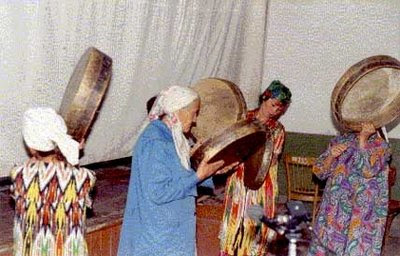
My main drum is the daf. In the purest sense of Islam, the playing of the daf is only permitted for specific occasions like Eids and weddings. It is only permitted to be played by women.


I do own a djembe (like the drum Brother Jamaluddin can be seen performing with in the videos, strapped around his waist). The djembe is a drum most commonly played in West Africa, however, many people around the world play it. I bought the djembe because I live in a very small town and a local teacher was offering lessons. I figured that once I learned to drum in a formal kind of way, through lessons, that I could then teach myself the rhythms of the daf.

And I have done this, Alhamdulillah.

But deep down, I always feel a little bit anxious. Why? Because I know that music and musical instruments (other than the daf) are a controversial topic in Islam. Some scholars say that it is all absolutely forbidden. Yet others say that, like anything, it is permissible if it doesn't distract a person from their Islamic duties and if the music doesn't promote the haraam.

I then read an essay on the Internet written by Brother Yusuf Islam (formerly "Cat Stevens") called Music: A Question of Faith or Da'wah. He did so in response to the criticism and controversy that occurred after he returned to the music industry after a long absence. These words stuck out for me:

"Different opinions about music indicate that it is not to be taken as a question of faith ('Aqidah), but is simply a matter of understanding (fiqh)."

I agree with Brother Yusuf. I have really thought about this, talked to Muslims, and most importantly, I have prayed about it. Some of my Muslim sisters think I "rock" because I play drums. Yet others think that I am an open sinner with no shame. Ya Allah. It is truly distressing.

(Me - Drumming With My Teacher For a Children's Class)

So I can understand the trepidations of Brother Jamaluddin.

Insha Allah, the Almighty (swt) will judge us all and forgive us all/Ameen.

Sunday, December 14, 2008

Watching the Evening News: A Poem


Surfing
From
Channel
To
Channel

Resenting
The
Renegades
Of
Religion

Foraging
For
Remnants
Of
Feelings

Salvaging
What's
Left
Of
Sanity

Fumbling
To
Find
An
Explanation

Searching
The
Sources
For
Daleel

Seeking
Protection
And
Allah's
Mercy


Copyright © 2008
S. E. Jihad Levine

Saturday, December 13, 2008

Reflections: The 3 Most Important Men From My Childhood


(Some reflections on the men of my childhood - part of a piece I recycled from my old blog. Excuse the formatting - Blogger is having a bad day:)

I was born in New York City, but when I was around four years old, my family moved to Chicago. For a short time, I was daddy’s little girl, the apple of his eye. But he only lived with us for a brief 11 years. And during those years, he was gone most of the time on “business” trips. We later learned that he had a secret life that included drugs, crime, and other women. But I was a little girl, and all I knew was that he was “My Daddy”! When he came home, he always had presents for everybody and things felt normal until he left again, and until eventually my mother divorced him.


(My Daddy and I - swimming)

What stands out in my mind about my dad from my childhood is that on at least one occasion he was the neighborhood hero. One hot summer afternoon, our whole family was outside togetherbehind my grandparent’s apartment building. The adults were talking, laughing, smoking cigarettes, and sipping cold drinks. The children were playing over at the building’s playground. The merriment was interrupted by the piercing scream of a woman, from somewhere high up in one of the top floor apartments. As everyone looked up in the direction of the scream, a young man could be seen running down the back steps of the building. Instinctively, my father knew that the man had something to do with the woman’s distress. To my mother’s dismay, my father got up and ran after him. The woman was yelling that she had been robbed by the young man. In broad daylight! Now my mother was really alarmed, afraid that my father would be hurt by the desperate burglar. Someone must have called the police, because they arrived a few minutes later. A search of the area began. They found my father around the corner of the building, holding the man on the ground until the police could come and take control of the situation. When it was all over, my father emerged a hero. Even though my mother continued to nag and scold him the rest of the evening for taking such a risk, she was proud of her husband and I was the envy of all the kids present that day.

His dad, my paternal grandfather also doted on me. I was the first grandchild born to that side of the family (no one minded that I was a girl). We used to visit my grandparents every weekend and it was the highlight of my week. As soon as my parents’ car came to a stop, I climbed out, and raced ahead of my parents, and flew up the few flights of steps to my grandparent’s apartment. Grandma would meet me at the kitchen door with a kiss and she would then turn to greeting my parents. I ran through the apartment searching for Grandpa.

(My Grandpa and I - in the park in New York City)

Sometimes I found him working in his home office. I loved Grandpa’s office, especially when he would let me work in there. As a child, I spent hours in his office, sitting like a grown up on his very own chair, pushing the keys of his adding machine and using up the entire roll of adding machine tape. He would appear in the doorway, looking at me with a stern look on his face, pretending like he was mad at me for using up the whole roll of paper. But I would only smile; I knew he was going to replace the roll and in no time I would happily banging away on the keys again. My Grandpa also had an endless supply of yellow, lined writing tablets. I filled many tablets while visiting at his house – with everything from school homework to practicing my penmanship. Filling up these tablets was my first introduction to writing.

Other times I found him in the bedroom reading. From my grandfather, I received the gift of a passion for reading. My grandparents had two double beds pushed together. They were the kind of beds that had shelves built into the headboards, and they were crammed with books and magazines. Grandpa and I spent entire Sunday afternoons reading together, laying on that giant bed, he on his side, and me on my grandma’s side. I “read” all his books and looked at the pictures in all of his magazines. I especially loved National Geographic. My Grandpa had books, magazines, and newspapers strewn all over the house - even in the bathroom. My favorite bathroom book was Jewish Jokes for the John!

After my parents got divorced, my mother, my brother, and I moved far away from my father and my grandparents to Pennsylvania where my mother’s family lived. There I got to know her father, Grandpaw. He didn’t have an adding machine or writing tablets. I never saw him read a book. In fact, he didn’t even know how to read in English. He didn’t have an office either. But, he did have a shop of sorts.

Located in the corner of the sun porch, nestled behind the table my Grandmaw used for setting the pig’s feet to gel, his shop consisted of a huge watchmaker’s desk. It was a wooden roll top desk, with dozens of little drawers, sections, and compartments. He had a wide array of tools, parts, and an assortment of bottles containing oil and polish. There was also a chair next to his desk so I could sit and keep him company. By day, he worked as a coal miner. At night and on the weekends, he repaired clocks and watches for everyone in the neighborhood. He also fixed cuckoo clocks and music boxes. He worked long hours at that desk, jeweler’s loop in one eye, cigar in one hand, fixing everyone’s time pieces. When he dismantled them, he placed the tiny intricate pieces and screws on the desk, fixed the piece, and then put it all back together again. Although he drank beer while he worked, he never messed up anybody’s watch or clock. I was amazed by all the clocks he had on the shelf. After he fixed a piece, he would put it on the shelf for a day or two, just to make sure it worked properly. It wasn’t unusual for him to have 20 clocks or more and a few music boxes on the shelf at one time. I would wait patiently for the top of the hour to arrive so I could witness the symphony of chimes, rings, and bells. Emerging from the cuckoo clocks was everything from birds and ballerinas, to ladies with brooms sweeping off the clock decks. When I got older, Grandpaw entrusted me with the job of pulling up the chain pulleys on the cuckoo clocks so the cycle could start all over again. How important I felt being Grandpaw’s assistant! When he was finally finished with someone’s repair job, he put it in an envelope or a paper bag. The people would come to the sun porch door to pick up their item. If Grandpaw answered the door, he usually gave them the package without charging them any money. That was how kind my sweet my Grandpaw was. Besides, he enjoyed being a watchmaker. It was his occupation when he lived in Poland. Because he was too kind, Grandmaw took to answering the door and collecting the money when the people came.

When he was finished working, or if he felt we needed a break, we would sneak off to the tavern where he would join his coal miner buddies and other friends from the “old country” for beers and shots. He would perch me next to him, high on a bar stool where I had to lean against the counter to keep from falling off. If we got there around dinner time, the bartender gave me a free fried fish sandwich and french fries. Whenever someone ordered a round for the entire bar, I received a soda. I drank Coca-Cola and ate potato chips until I thought I would bust. His friends also used to buy me Hershey Bars and Baby Ruth candies. Often, I also came away from those jaunts with a pocket full of quarters and dimes that the guys gave me. On a good night, I even got a paper dollar bill or two from one of the miners. Many times we stayed at the tavern well into the evening hours. If I got tired, Grandpaw moved me to a booth, where I watched the TV high up in the corner of the bar. Sometimes I fell asleep. I loved those trips to the tavern even though I knew we would be in trouble with Grandmaw when we got back home.

On one of his trips back from the tavern, when I wasn’t with him, he got hit by a train. He was drunk, but he had the sense to leave his car at the tavern. We figure that he was blinded by the headlight of the oncoming train as he tried to walk across the tracks to come home. Grandmaw and her friends found him in the ditch next to the tracks when they returned from playing bingo. Grandmaw was real mad because she figured that he gotten drunk and passed out there. She and her friends carried him home where they dropped him on the living room floor.

The next day my uncle came over and told Grandmaw that we should take him to the hospital. There he died. I never saw my Grandpaw again until he was lying in a casket at the funeral home. Because the house was full with family staying over during the days before the funeral, I had to sleep in Grandpaw’s single bed. I laid there and cried all night, feeling guilty for not being with him at the tavern the night he got killed.

When Grandpaw wasn’t working or drinking, he liked to garden. I have a picture of him standing near his garden, holding a kitten in his arms. It’s my favorite picture of him.


(My Grandpaw and Grandmaw in their garden in Pennsylvania)

Harry was my mother’s second husband, my step-father. Harry came into our lives, stepped up to the plate, and assumed the role that my own father had willingly thrown away. My mother never had to work outside of the home after she married him. When my father stopped supporting us, it was Harry who took care of us.

(My step-dad, Harry)

It was him who took us out of the housing project bought us our very own house to live in. He was there for me during the most important time of my life – adolescence. He taught me how to drive. He had a few extra beers when I practiced the clarinet. He came to the high school football game to watch me perform in the marching band. He took a photograph of my boyfriend and me the night of our prom. He came to my high school graduation. He taught me that being a father is more than writing a child support check. More than a weekly collect telephone call I received from my own dad. More than the occasional letter or card he sent. More than the two-week summer vacation I spent with my own dad. He taught me that fatherhood is steady, consistent, and persistent. He acted as a role model for manhood that my brother chose to ignore. He was there for us until death took him. He had a heart attack on his way to work. After his death, his personal items from the car were given to us. He had a picture of me in his wallet.

It was Father's Day in 2006 when I originally wrote this piece on my old blog. I was thinking, that day, about how wonderful it is that Islam doesn't need to set aside a special day to honor fathers and grandfathers. My father and grandfathers are constantly on my mind. They each, in their own way, enriched my life and gave me numerous gifts that contribute to the person that I am.

Today seemed like a good day to recycle this piece!

Tuesday, December 09, 2008

Samir and Hawa


These are my cats, Samir and Hawa. They are littermates. The long one, spread out in the foreground is Samir; behind him is his sister.

They were born in Masjid Ikhwa in Brooklyn, New York, and lived in the masjid until they were given to me as a gift. Their mother lives in Masjid Ikhwa. I've had the honor to have had numerous cats as companions in my life, but these guys are special. They're Muslims!

From living in the masjid, they're used to hearing the Adhan. They come running whenever it is called. They wait for the prayer rugs to be spread out and they, too, take their place. When they hear Qu'ran being recited, they curl up contently to listen.

Cats enjoy a special place in Islam. It is well known that the Prophet (saw) was fond of cats. His companion, Abdur-Rahman (ra) was known by the people as Abu Hurayrah, which translates as "father of the kitten" because he, too, often enjoyed and played with cats since his childhood.

There are numerous hadiths about cats:

"Yahya related to me from Malik from Ishaq ibn Abdullah ibn Abi Talha from Humayda bint Abi Ubayda ibn Farwa that her maternal aunt Kabsha bint Kab ibn Malik, who was the wife of the son of Abu Qatada al-Ansari, told her that once Abu Qatada was visiting her and she poured out some water for him to do wudu with. Just then a cat came to drink from it so he tilted the vessel towards it to let it drink. Kabsha continued, "He saw me looking at him and said, 'Are you surprised, daughter of my brother?' I said, 'Yes.' He repled that the Messenger of Allah, may Allah bless him and grant him peace, said, cats are not impure. They intermingle with you.'" Yahya said that Malik said, "There is no harm in that unless one sees impurities on the cat's mouth." (Malik's Muwatta)

Narrated Asma' bint Abi Bakr: The Prophet once offered the eclipse prayer ... On completion of the prayer, he said, "Paradise became so near to me that if I had dared, I would have plucked one of its bunches for you and Hell became so near to me that I said, 'O my Lord will I be among those people?' Then suddenly I saw a woman and a cat was lacerating her with its claws On inquiring, it was said that the woman had imprisoned the cat till it died of starvation and she neither fed it nor freed it so that it could feed itself." (Sahih Bukhari)

Narrated Jabir ibn Abdullah: "Abu Zubayr quoted the authority of Jabir ibn Abdullah for the statement that the Prophet forbade payment for a dog. Ibn Abdul Malik said: to eat a cat and to enjoy its price." (Sunan Abu Dawud)

I also found some internet references about cats and Islam on some cat websites. One of them quotes a story of a cat who saved the Prophet (saw) from being bitten by a deadly snake. In another tale, the Prophet (saw) had a cat named Muezza. When the Prophet (saw) was called for prayer, the story goes, he saw that Muezza was asleep on the sleeve of his robe. Rather than disturb the cat, the Prophet (saw) cut off the sleeve. When he returned, the cat awoke and bowed gracefully to thank the Prophet (saw) for his consideration. The Prophet (saw) stroked the cat three times. However, I cannot find any valid Islamic references for these tales. If anyone knows of any, please leave a comment with the source!

Friday, December 05, 2008
An Eid Story

(The following is a short story, not a true event - but it fictionalizes a problem so common in many of our Muslims communities, may Allah (swt) forgive us!)


It happened during the Blessed 10 days of Zul-Hijjah. Actually, it was a few days before the Eid ul-Adha when the news of Umm Hafsa’s murder stunned our small Muslim community. There was no question about who did it. She died at the hands of her husband. He admitted it.

Once the details of the murder became known, no one in our little masjid could believe what had occurred. The imam himself went to the city lockup so he could hear it directly from the lips of the jailed husband. But to a group of us sisters who called ourselves close friends of Umm Hafsa, the only surprise was that we hadn’t admitted to each other that Umm Hafsa was being abused and that she needed our help before it was too late. In hindsight, all the signs were there.

On the morning of the janaaza, we agreed to gather early in the women’s area of the masjid. We needed the comfort of each other. A tearful Umm Nadia was sitting alone saying dua when I entered the prayer area.

Inna lillahi wa inna ilaihi rajioon,” she sobbed after rising to greet me. “I feel like I can’t wake up from a nightmare! I heard on the news … that he shot …” The unfinished sentence trailed off as she dug in her purse for a tissue. “And the precious children saw everything … Ya Rabb!” she wailed.

“I know, shhhh,” I murmured as she collapsed into my outstretched arms. Looking over Umm Nadia’s shoulder, I saw Sisters Halima and Amina come in. There was a chorus of as salaamu alaikums as we all embraced each other and cried. After we sat down, we silently supplicated together for Allah to forgive the sins of Umm Hafsa and for Him to prepare her a spacious grave.

“I feel so guilty, may Allah forgive me,” Umm Nadia confessed. “I should have heeded my gut feelings. Her husband seemed so controlling and dominating. I had a bad sense about him from the start. When I saw her with that discolored eye, I believed her when she claimed that the baby had poked her. Then there was the broken arm that she explained away by saying that she tripped over her son’s toy fire truck. Ya Allah … all the excuses.”

“The miscarriage!” Sister Halima exclaimed. “Do you think …?”

Sister Amina related that she had attempted to reach Umm Hafsa by phone for weeks on end to no avail. “I knew she was home. Where else would she be?” she sniffled. “Her husband wouldn’t teach her how to drive or let her go anywhere without him. He was the one who would chauffer her when it was absolutely necessary for her to go out of the house.”

“She used to come to our halaqas once in awhile,” I reminded them. “But he eventually put an end to that. What kind of husband doesn’t want his wife to get together with her sisters to learn about the deen?” I said as I twisted in my seat.

“He was isolating her,” Sister Halima explained. “He wouldn’t even buy a computer for the house so she could use email and instant message. You all know how much she missed her mom and her family overseas. He tried to keep her from everyone as much as he could. But he sure enough had his own Blackberry though.”

“I remember inviting her out to lunch and an afternoon of shopping,” I added. “But she told me that she didn’t have her own money.”

I hung my head and remembered the frustration I felt in trying to nurture my friendship with Umm Hafsa over the last few months. I developed a connection with her the first time I met her at the Eid prayer a year ago. She and her husband had just moved to our community. We had children who were the same ages and she reminded me of my own sister. I drifted off remembering my gentle friend and Muslim sister. Umm Hafsa was a slim woman with warm, kind eyes. She recited surahs with a voice so sweet that it brought tears to my eyes. My lips turned up in a smile as I remember how we used to get together a few days a week with the kids, taking them to the park, going to each other’s homes so the kids could play together, visiting, chatting, and laughing. Then her husband lost his job and he was home most of the time. I did go over to her house once when he was there. I chewed my bottom lip remembering how I could sense that he didn’t want me in his home. So I didn’t stay long that day, and it got more difficult for us to get together after that.

“What?” I said as I awoke from my daydream and realized that Umm Nadia was speaking to me.

“You were talking about money, and I was saying that he wouldn’t allow her to work. I thought it was a shame because she had a university education and really wanted to work as an English teacher. And they could have used the money.”

Sister Halima confided to us that Umm Hafsa had once acknowledged feelings of depression and anxiety. She worried about her husband’s humiliation over being unemployed. “He was always stressed out and spent most of his day barking orders at Umm Hafsa as if he was a drill sergeant. Umm Hafsa was crushed.”

“That’s no excuse,” I replied. “A lot of men lose their jobs and don’t abuse their wives. There was probably a lot going on that we didn’t know about. My point is that his abuse didn’t just happen overnight.”

“You’re right,” Sister Halima admitted. “I think the job loss intensified what was always there. Umm Hafsa was horrified that her husband spanked their son one day just because he dropped juice on the carpet. He had never laid a hand on the boy before that,” she said.

Sister Amina recounted a conversation she had with her own husband. She told him she had suspicions that her friend was being abused and she asked her husband to speak with Umm Hafsa’s husband. Sadly, Sister Amina’s husband said that he didn’t want to interfere with a brother and his family problems.

“A lot of help those brothers are,” Sister Amina complained. Umm Hafsa even resorted to consulting the imam about the situation. She said that she knew a sister who was being abused by her husband, and the sister was seeking naseehah. But the imam’s only counsel to her was to say dua and be patient with her husband. He advised her to trust Allah and assured her that He would soon grant her relief.”

Little did he know …, I mused.

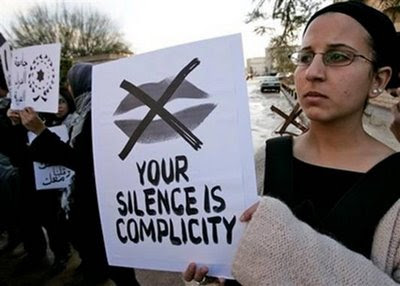
“I think Umm Hafsa’s situation is similar to a problem that is common in many Muslim households,” I said. “But old attitudes and stigmas prevent families from getting help. Most of all, silence destroys Muslim families. Take us, for example. We didn’t acknowledge to each other what we all knew to be true. We resisted the temptation to feed our suspicions. We absolved ourselves by claiming that we were busy with our own homes and jobs. When we didn’t see her or hear from her we told ourselves we would check in with her “tomorrow” but the day never came.”

“What could we have done to help Umm Hafsa?” Umm Nadia asked.

“We should have tried harder to let Umm Hafsa know that she wasn’t alone. We should have found a way to let her know that we knew what was going on. We didn’t encourage her to seek the help that is out there,” I said.

Sister Amina shared with the others that there are domestic violence hotlines that are staffed with professionals and volunteers who know exactly how to help and protect women and children at risk. She told us that the help is free and confidential. Using the hotline presents a woman with choices.

Sister Halima reminded us that domestic violence does not come from the religion of Islam. After all, our dear Prophet, peace upon him, never abused any of his wives, children or grandchildren.

Umm Nadia and I acknowledged that domestic violence is a crime. Silence about domestic violence endangers our Muslim communities.

We sat and reflected on everything that had been said as the women’s section began to fill with other sisters and their children. Each of us promised ourselves that we would never again remain silent when one of our sisters was at risk. We vowed that we would help before another one of our families ended up in tragedy.

Shortly thereafter, the speakers revealed the adjusting of the microphones from upstairs in the men’s area. Umm Nadia, Sister Amina, Sister Halima and I rose and prepared to join the congregation.

The Salat ul Janaaza for Umm Hafsa was about to start.


By S. E. Jihad Levine
© 2008